
Creators today build full businesses out of a single profile link. That URL has to carry a lot of weight – it sends fans to paid content, stores, mailing lists, tip jars, and partner brands. For many people, the choice comes down to two names: Linktree, the mainstream “link in bio” giant, and newer tools like GetMy.Link that prioritize creator freedom and flexible marketing.
Both platforms solve the “one link in bio” problem. Both let you build a simple page with buttons and embeds. But once content rules, monetization, and advanced marketing tools enter the picture – especially for adult creators – the differences start to matter.
This GetMy.Link vs Linktree article breaks down how both platforms compare on features, content policies, analytics, customization, and long-term growth.
The goal is simple: help creators decide which tool actually supports the way they work, instead of adding new limits.
What Link-in-Bio Tools Are Supposed to Do for Creators
At the most basic level, a link-in-bio platform should:
- Collect all of your key links in one place
- Look clean and mobile-friendly
- Be allowed on major socials and messengers
- Help you understand what fans click and where they come from
Linktree does this in a very mainstream, brand-friendly way. It focuses on simple landing pages with unlimited links, simple analytics, templates, and built-in monetization options like shops and digital product sales.
GetMy.Link takes the same core idea and builds a broader toolkit around it: bio pages, short links, QR codes, static micro-sites, file delivery, and analytics – all from one dashboard.
On the surface, both look similar. Underneath, they are built for slightly different realities:
- Linktree optimizes for brand-safe creators and large audiences.
- GetMy.Link optimizes for creators who need more freedom, including adult creators and marketers who rely on advanced tracking and off-platform flows.
Quick Overview: Linktree
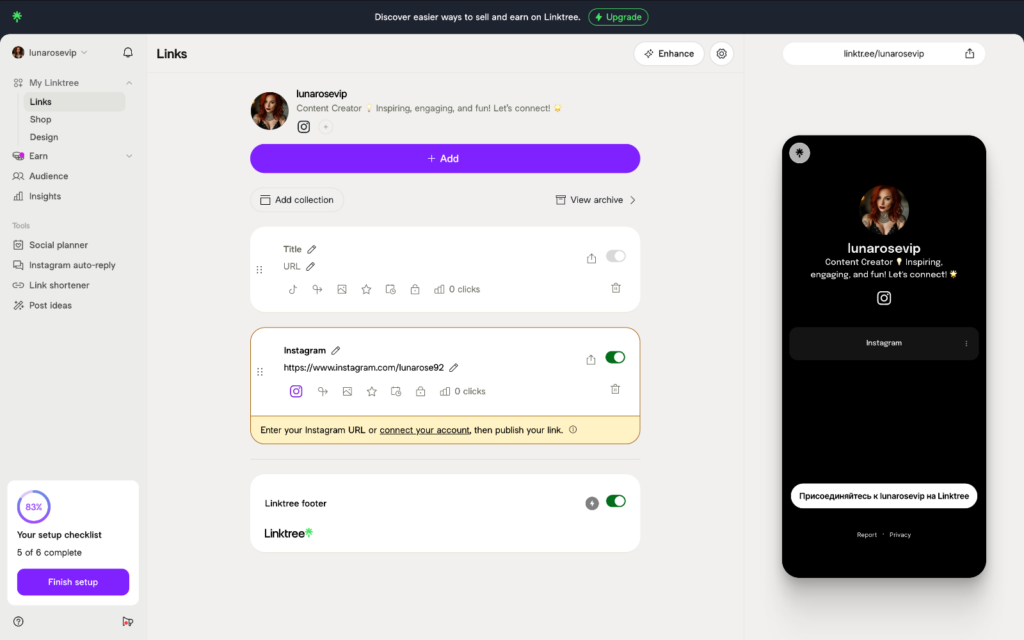
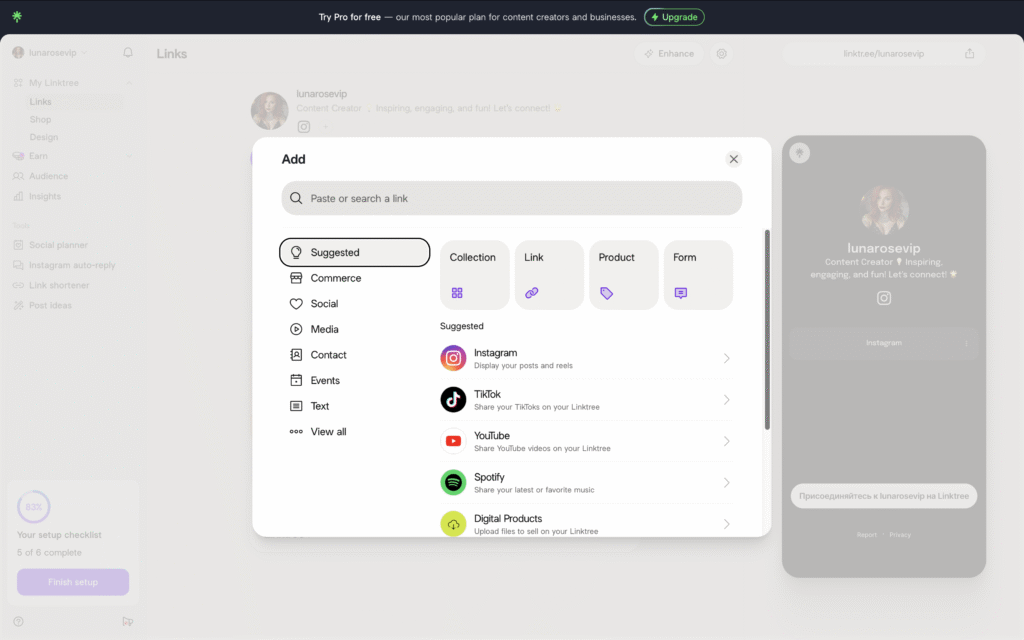
Linktree is the category leader, used by over 70 million creators and brands. It gives users:
- A customizable bio link page with unlimited links on every tier
- Templates, themes, and basic design controls
- Simple analytics (views, clicks, top links)
- A built-in QR code generator for your Linktree URL
- Monetization tools like shops, digital product sales, and affiliate promotions, available depending on plan and country
Pricing is tiered:
- Free plan with essential features and basic analytics
- Paid plans (Starter, Pro, Premium) that add more design options, advanced analytics, audience tools, and growth features, typically starting around $4-6/month and going higher on premium tiers.
On content rules, Linktree allows links to adult content as long as it is legal, not advertising full-service sex work, and marked as “sensitive”. The company also reserves the right to remove or restrict content based on laws in the countries where it operates.
For mainstream influencers, musicians, or brands who want a well-known name and are comfortable inside those rules, Linktree does the job.
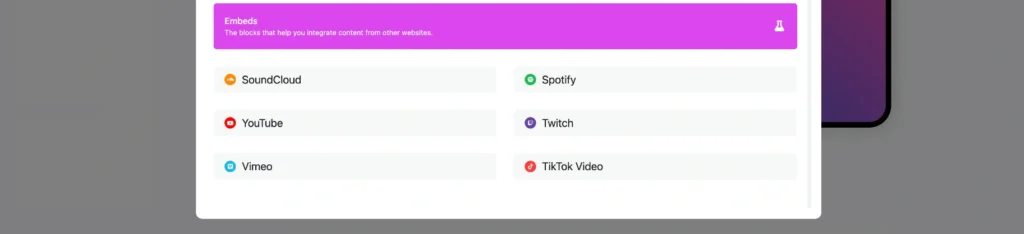
Quick Overview: GetMy.Link
GetMy.Link is an all-in-one link platform created with creators, marketers, and small businesses in mind – including those who work in adult and NSFW spaces.
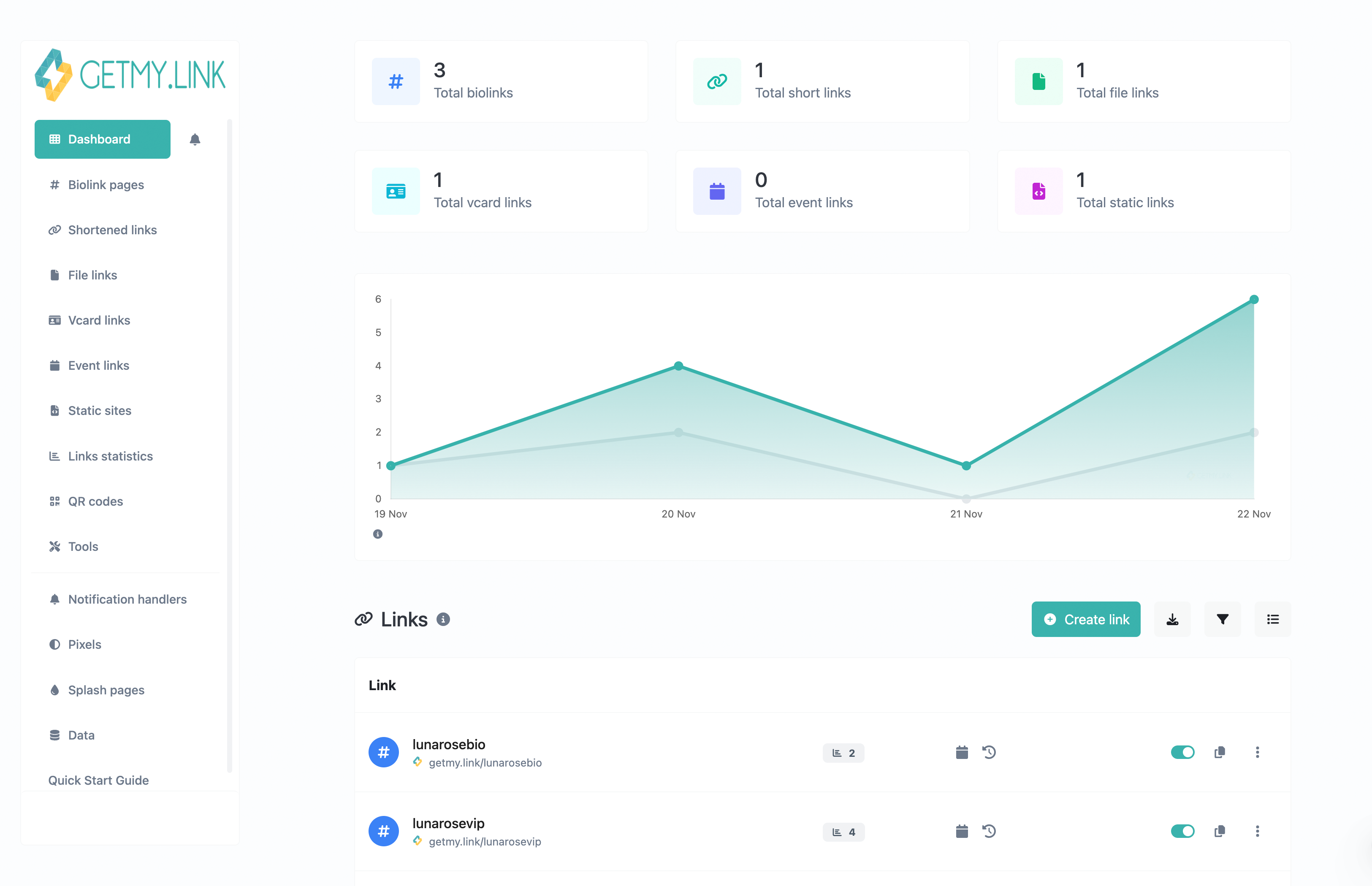
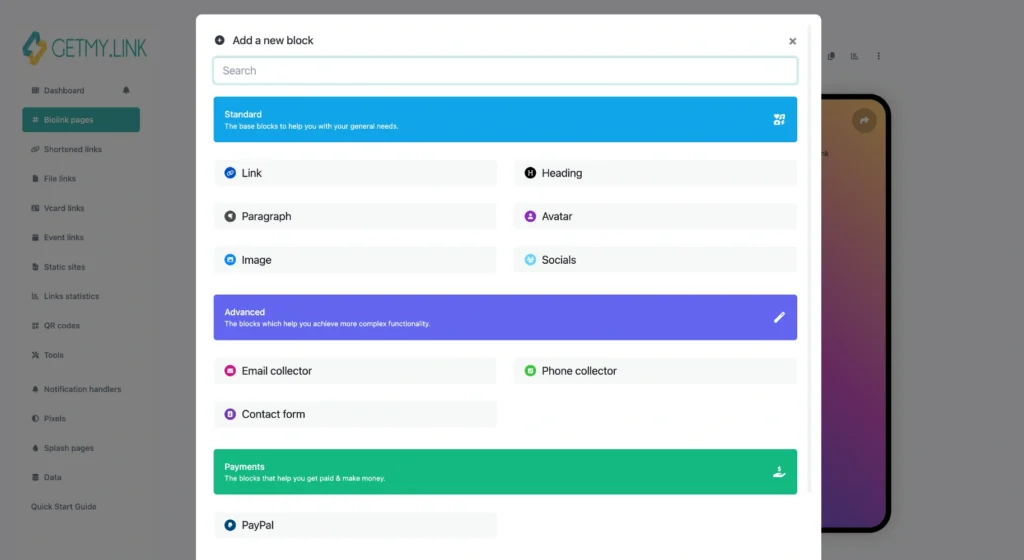
From a single dashboard, you can:
- Build multiple bio link pages
- Create shortened links with custom slugs
- Upload and share files through dedicated file links
- Generate advanced QR codes with custom styling
- Host lightweight static pages that look and act like mini websites
- Track clicks and add pixels for ad platforms
GetMy.Link is explicitly welcoming to adult creators. It is positioned as a link-in-bio alternative that does not penalize NSFW content with forced warnings, hidden pages, or silent bans, as long as the content is legal and not spam.
Key points for creators:
- All core tools – and there are a lot of them – are available on a free-to-use basis.
- You can create many bio pages and manage them without per-page charges.
- The design is clean and unbranded: no forced third-party logos or “powered by” footers dominating the page.
For creators who treat the link in bio as a real part of their business – not just an extra – this “toolkit” approach matters.
GetMy.Link vs. Linktree: Feature Comparison at a Glance
Here is a high-level comparison to show where the two tools overlap and where they diverge.
| Area | Linktree | GetMy.Link |
| Core purpose | Mainstream link-in-bio landing page for creators and brands | All-in-one link toolkit (bio pages, short links, files, static pages, QR codes, analytics, tracking pixels, UTM tags, NFC support, and more) |
Plans & pricing | Free + multiple paid tiers (Starter/Pro/Premium) | Core features available on a free basis with generous limits |
Adult content policy | Allows links to adult content if legal, must be marked sensitive; no full-service sex work; may restrict content per region | Explicitly welcomes adult creators; designed to avoid forced warnings and quiet bans, as long as content is legal and non-spam |
| Bio pages | Yes, with templates, themes, and embeds | Yes, with flexible blocks, branding controls, and multiple pages per account |
| Short links | Link shortener exists but mainly tied to the bio link brand | Full short-link toolkit with app-opening, custom slugs, and stats |
Static sites / mini websites | Not a primary focus | Dedicated “Static Pages” feature for simple one-page sites |
| File hosting & file links | Focus on embeds and products; not a general file-link system | Direct file upload and sharing via File Links |
| Analytics | Social + link analytics, more depth on paid tiers | Built-in analytics: countries & cities, referrers & UTMs, device/OS, browser, language |
| Pixels / retargeting | Available only on higher tiers or via integrations (varies by plan) | Native support for tracking pixels (Facebook, Google, TikTok, etc.) included as a core feature |
| QR codes | Unique QR code for your Linktree | Full QR code generator with custom shapes, gradients, and templates |
| NFC support | Not a flagship feature | Additional tools allow NFC tags to be linked to bio links or other pages |
| Branding & white-label feel | Linktree branding visible unless on higher tiers | Clean, creator-first pages with no heavy platform branding |
Both tools can live in a social bio. GetMy.Link leans harder into being a “control center” for traffic and conversions, especially when the content or audience lives outside mainstream comfort zones.
Freedom, Rules, and Adult Content
For creators who work with NSFW material – cam models, OnlyFans creators, clip stores, fetish educators – content policy is not a small detail. It decides how many obstacles fans see before reaching a subscription page.
Linktree’s approach
Linktree’s community standards say that creators may:
- Create links to adult content, if it is legal in their region
- Advertise adult media they create and sell on other platforms
However, links must be marked as sensitive, and anything that could be seen as full-service sex work is not allowed. The company also clearly states that it may restrict or ban content that is legal in some regions but conflicts with laws or policies where Linktree operates.
This policy keeps the brand extremely safe for advertisers and app stores. From a creator’s perspective, it also introduces uncertainty: content can be labeled, flagged, or restricted with little control on the creator’s side.
GetMy.Link’s approach
GetMy.Link was built with adult creators in mind. It’s no secret that many mainstream bio tools hide NSFW pages behind heavy warning screens or quietly suspend accounts that link to platforms like OnlyFans, Fansly, Pornhub, or ManyVids – and GetMy.Link positions itself as the opposite of that experience.
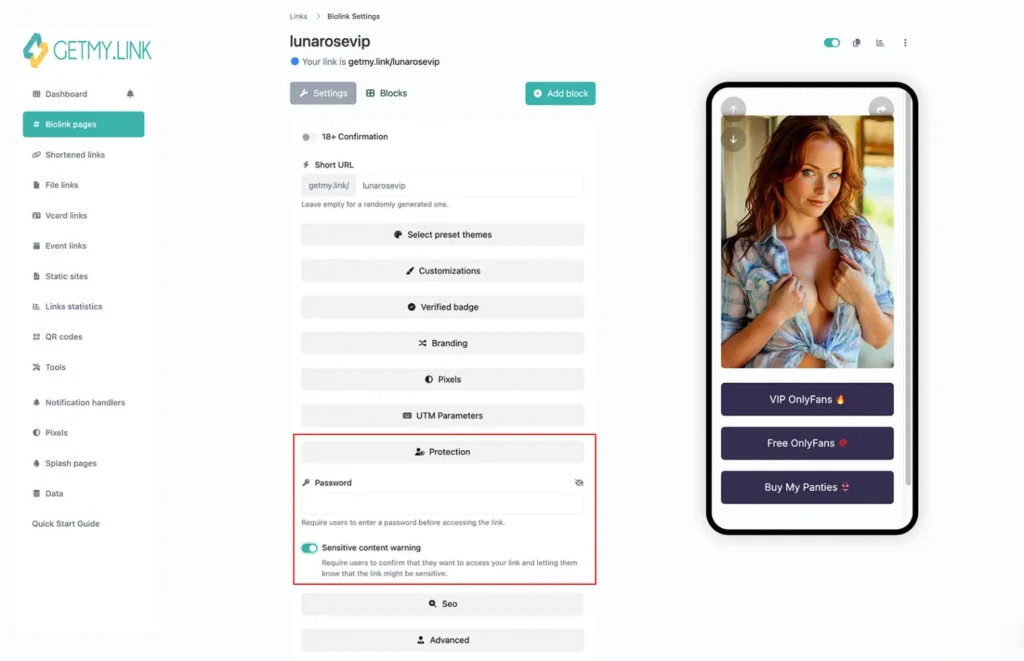
(GetMy.Link panel with age confirmation and password protection)
Key differences:
- Adult platforms are explicitly accepted destinations, as long as the content is legal and not abusive.
- An NSFW warning can be added, but it is presented as an optional safety tool, not a default punishment for adult links.
- The emphasis is on stable promotion: fewer surprise bans, fewer forced filters, and less friction between tap and conversion.
For creators whose income depends on adult traffic, this kind of policy difference can mean the gap between a growing funnel and a slow leak of lost fans.
Marketing Tools and Analytics
Many creators use a bio link as more than a simple directory. It becomes a mini marketing system: tracking campaigns, retargeting visitors, and sending traffic to different destinations based on device or platform.
Linktree
On Linktree, analytics focus on views, link clicks, and basic audience insights. Paid tiers add more detailed social and link analytics, plus sales reporting for the built-in shop.
For many influencers, this is enough: they see which buttons are popular and where their audience clicks.
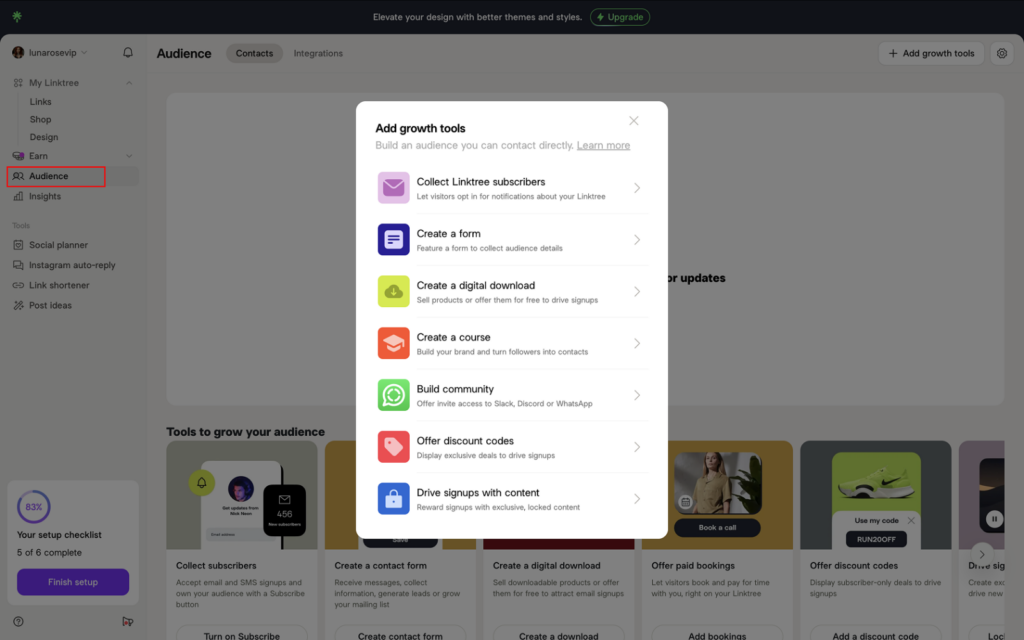
(Linktree’s audience growth tools for forms, downloads, courses, and sign-ups)
GetMy.Link
GetMy.Link’s analytics are closer to what a marketer expects from a standalone tracking tool:
- Geographic breakdown down to countries and cities
- Referrers and UTMs
- Devices, operating systems, browsers, and languages
- GDPR-friendly tracking by design
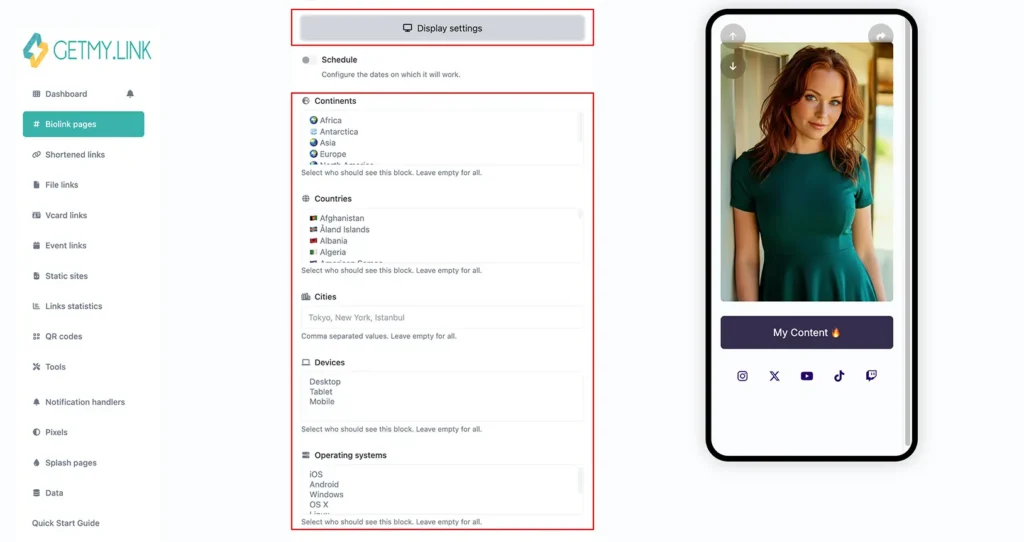
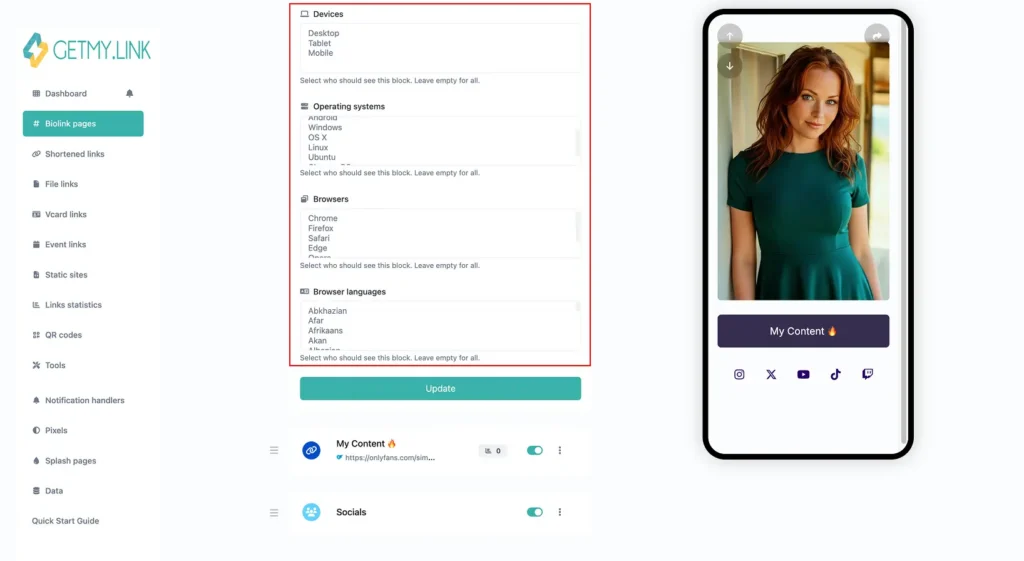
(GetMy.Link targeting tools: country and device filters, browser and language targeting)
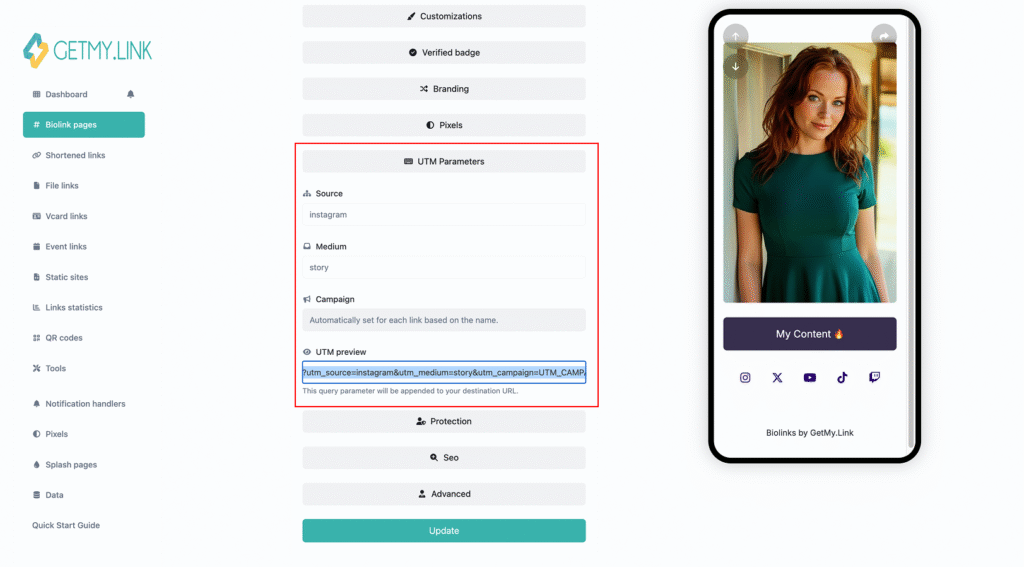
(GetMy.Link tracking tools: built-in UTM parameters)
On top of that, the platform lets creators add tracking pixels from major ad networks directly to their pages. That opens up:
- Retargeting campaigns (for example, showing ads to people who visited a bio page but did not subscribe)
- Lookalike audiences built from visitors who viewed certain offers
- Cross-channel tracking between social platforms and paid traffic
Short links and file links each have their own stats, so creators can compare performance between X (Twitter), Reddit, Telegram, or paid shoutouts without extra tools.
This turns the platform into a small analytics hub – and in any GetMy.Link comparison, this level of visibility becomes a major advantage. For creators who run promos, paid traffic, or affiliate campaigns, that kind of insight matters.
Static Pages, File Delivery, QR Codes, and NFC
Another big difference between the two platforms is how far they go beyond the classic “link list” format.
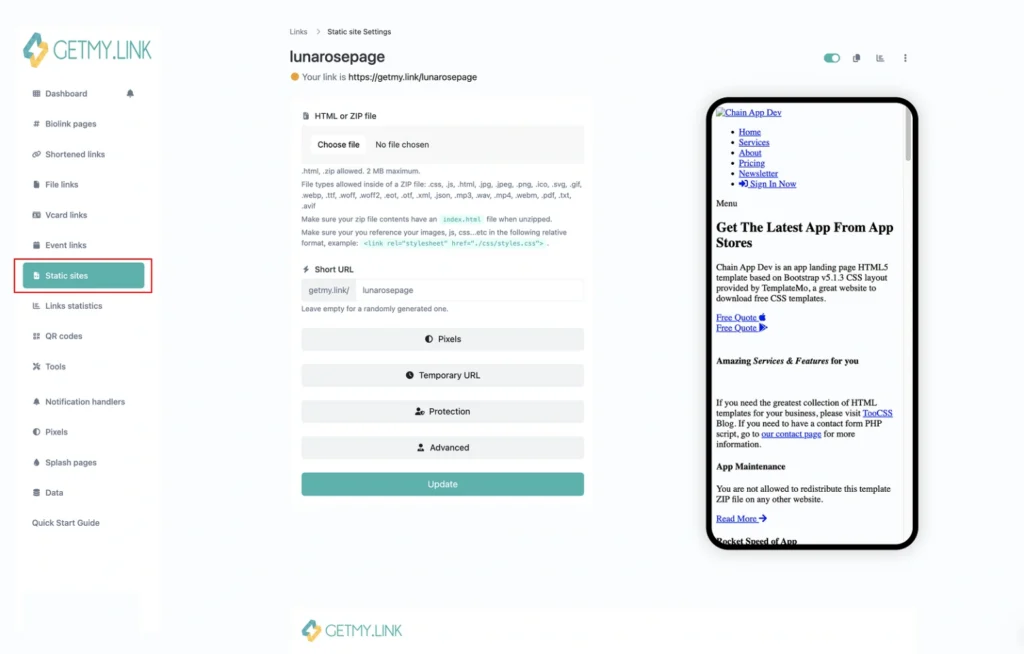
Static pages
GetMy.Link includes a dedicated Static Pages feature, allowing creators to build simple one-page sites directly on the platform. These mini sites can act as:
- A landing page for a specific promo or season
- A branded homepage for people who find a creator through search
- A lightweight alternative to building a separate website from scratch
The GetMy.Link blog leans into this idea by framing static pages as “mini websites” that give creators a personal space online beyond just a social profile.
Linktree can visually mimic a small site with blocks and sections, but it does not position a separate static-site product in the same way.
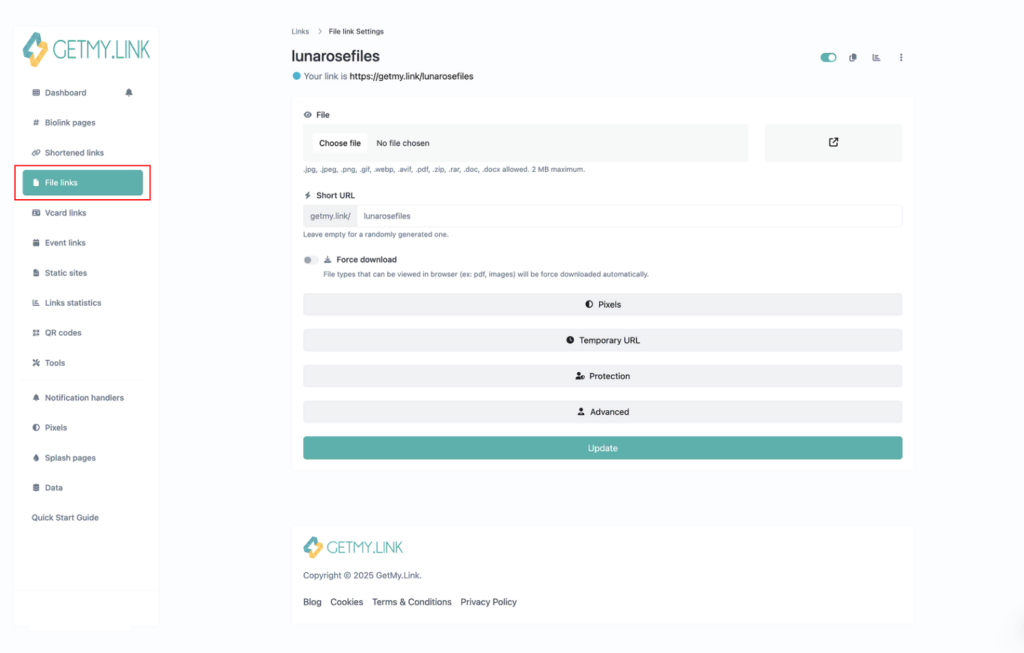
File delivery
GetMy.Link goes a step further with File Links, which let creators upload and share files – photos, videos, packs, and more – without relying on external storage providers.
For creators, this can power:
- Delivery of bonus content promised in social campaigns
- A yearly photo-video archive pack for those who want everything at once
- Simple email lead magnets (for example, “download my hot Christmas menu with a sweet free surprise inside”)
Linktree focuses more on embeds and product listings than on generic file-link workflows.
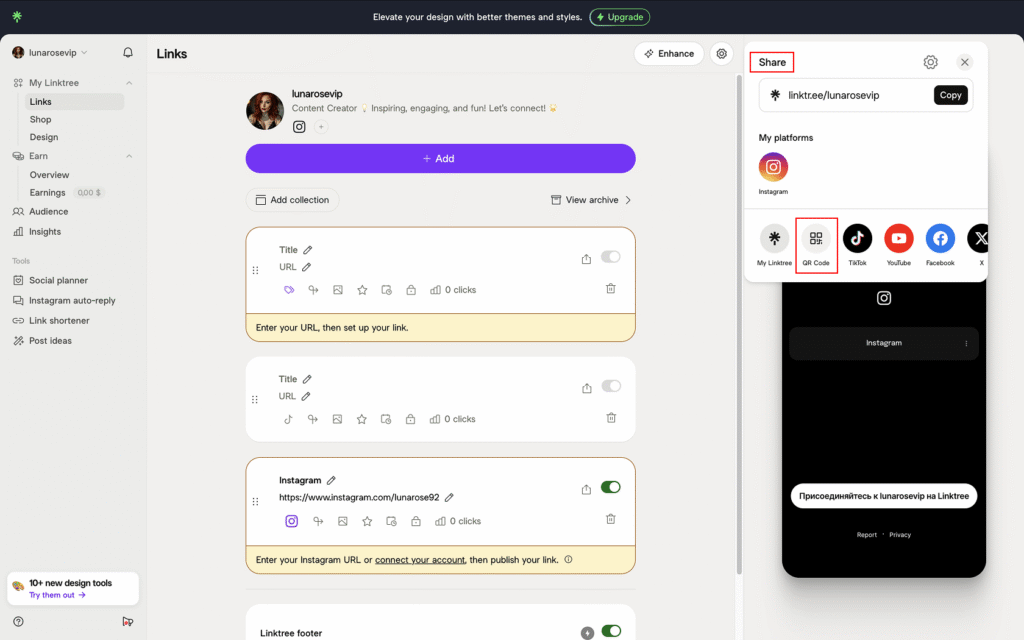
(Linktree’s basic QR code generator available through the Share menu)
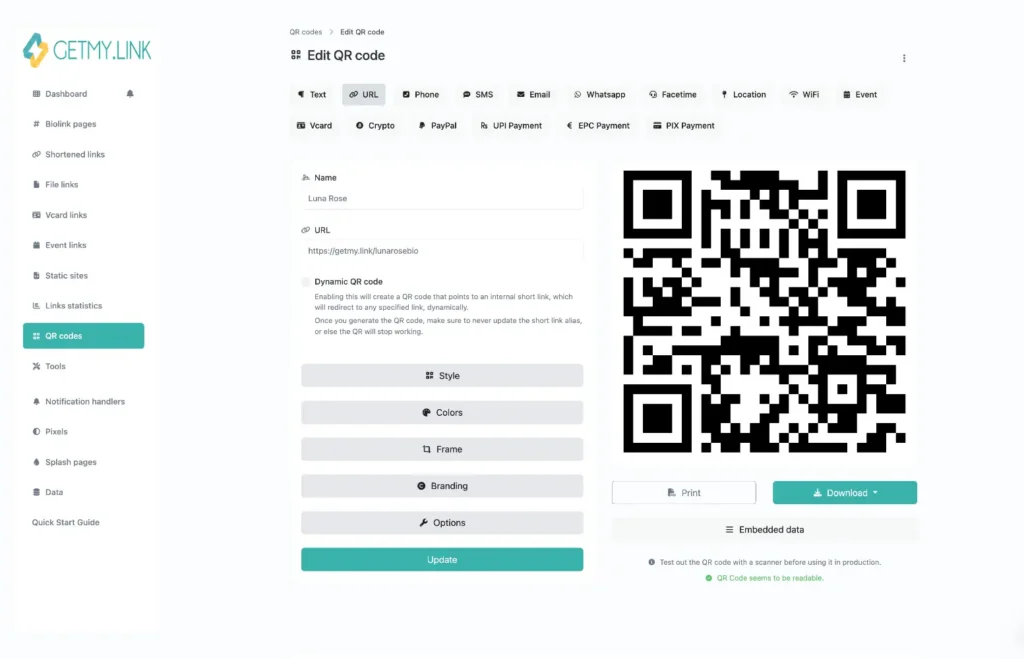
(GetMy.Link QR code generator for any page, short link, static site, or product)
QR codes and NFC
Linktree generates a QR code that points to the Linktree page. This works well for posters, packaging, and event banners.
GetMy.Link includes a full QR system:
- Multiple QR templates
- Custom colors, gradients, shapes, and frames
- QR codes that point to bio pages, short links, static pages, events, and more
The platform also supports NFC flows (here’s an article that explains the advantages of NFC and real use cases for your creator workflow).
For creators who meet fans at studios, clubs, pop-ups, and fun events, that combination – dynamic bio pages plus QR plus NFC – creates a smooth offline-to-online bridge.
Customization, Branding, and Ownership
A bio page is part of a creator’s brand. If it looks generic or heavily branded by the tool provider, it can weaken that impression.
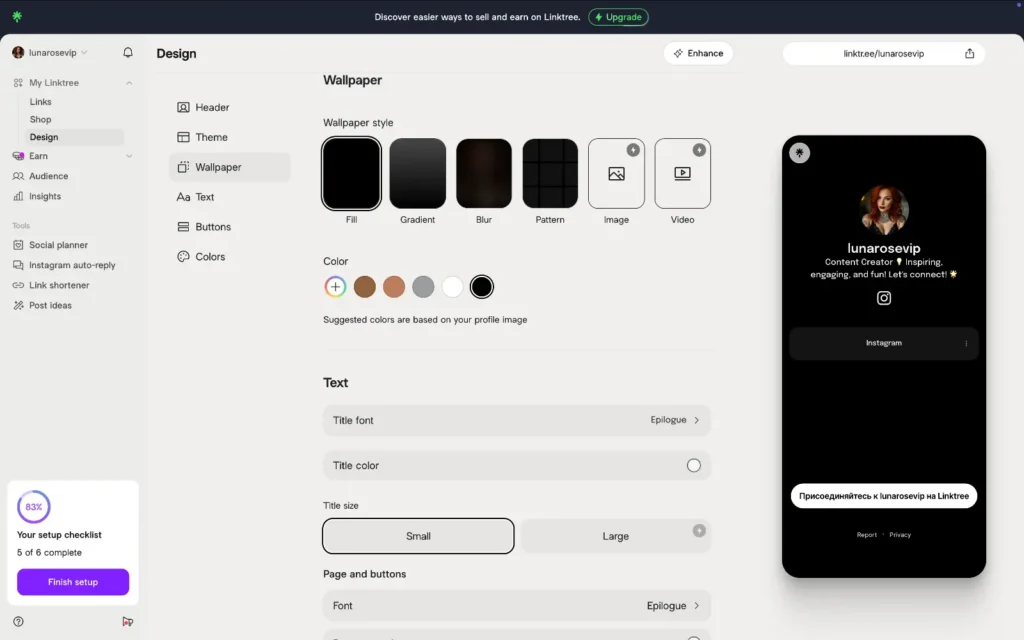
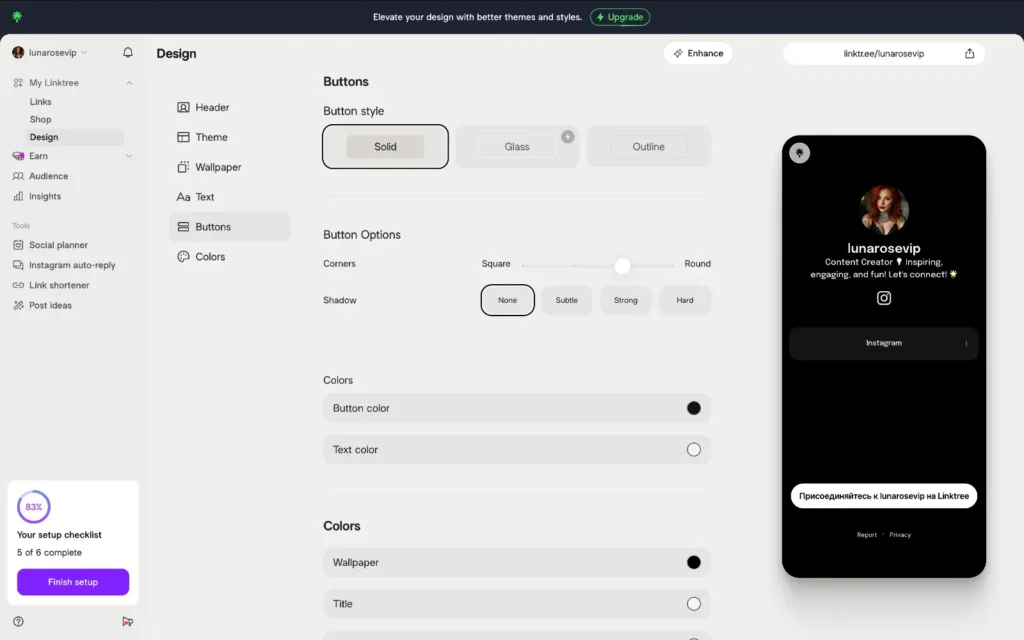
Linktree
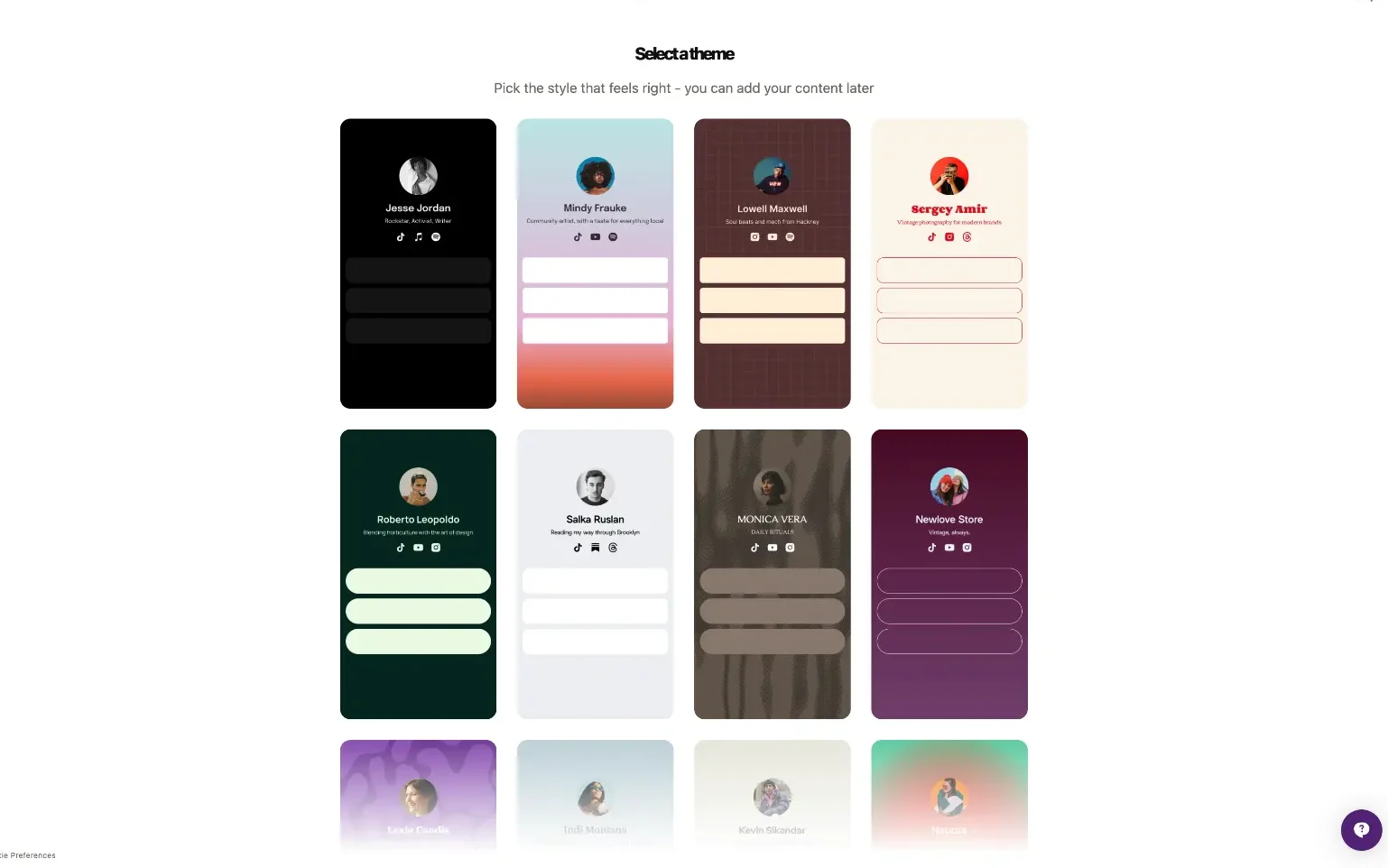
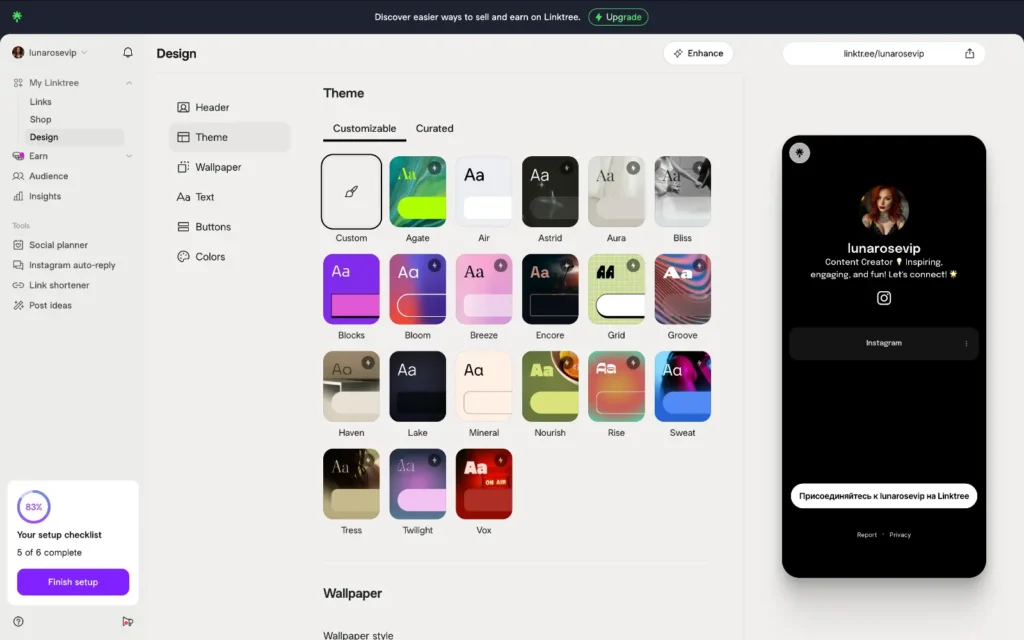
Linktree offers:
- Themes and custom color palettes
- Embeds, video previews, and layout options
- More advanced customization on paid plans
On free plans, the page still carries Linktree branding and has design limits. Upgrading unlocks more visual freedom, plus features like removing the Linktree logo in some tiers.
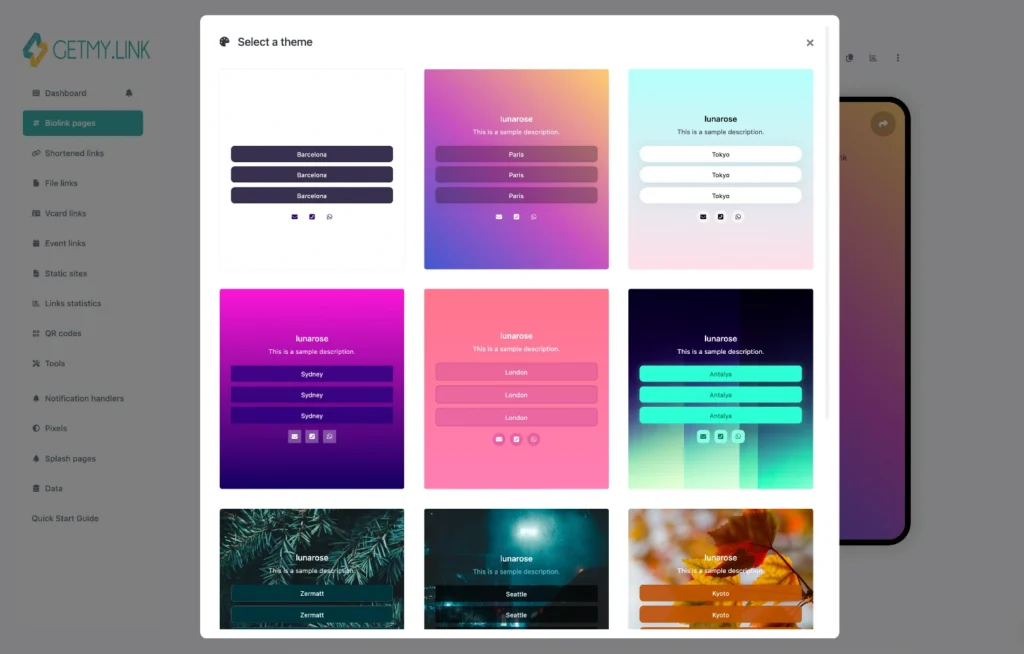
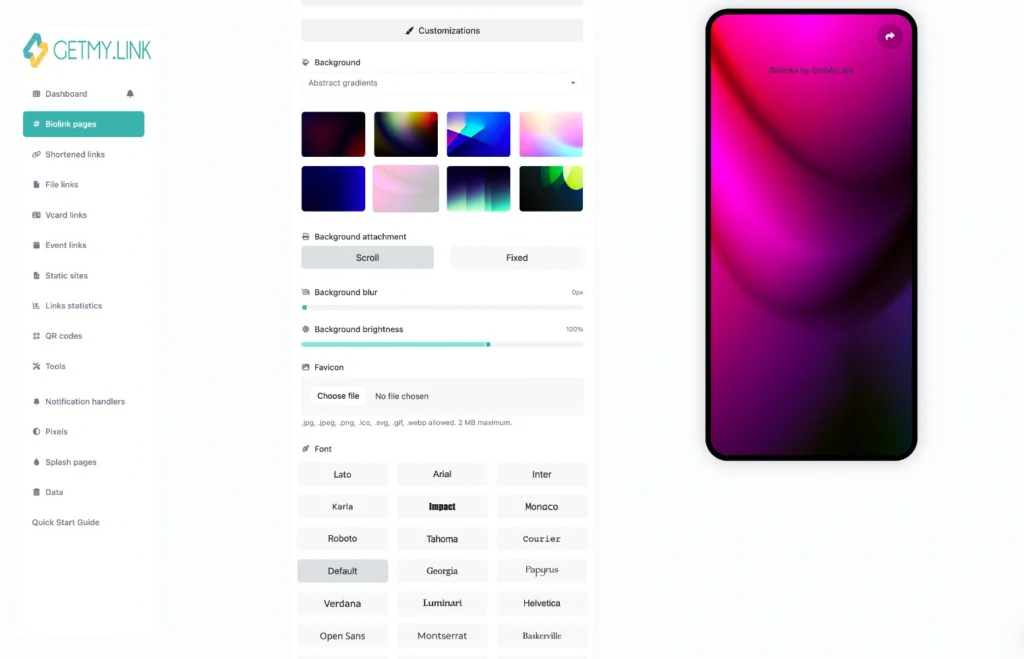
GetMy.Link
GetMy.Link treats the page more like a white-label site:
- Branding section for name, favicon, and external website
- Fine-tuning of backgrounds, fonts, spacing, blocks, and sections
- No heavy “powered by” watermark taking attention away from the creator’s brand
For adult creators in particular, this matters. Many mainstream tools emphasize their own brand to keep distance from NSFW content. GetMy.Link leans the other way and lets the creator’s identity sit front and center.
Pricing and Long-Term Value
Pricing changes over time, but some structural differences stand out.
- Linktree monetizes through a freemium model. The free plan is capable, yet many advanced features – deeper analytics, audience features, expanded customization – sit behind paid tiers starting around a few dollars per month and going up for Pro and Premium.
- GetMy.Link positions its platform as permanently free, offering a wide range of core tools at no cost and providing generous limits on both pages and links.
For a creator on a tight budget, especially one just starting with paid content, this difference can decide which toolkit is even accessible. Instead of choosing which features to sacrifice on a free tier, GetMy.Link makes the full toolbox available from day one and lets the creator worry about traffic and content rather than SaaS costs.
Which Creators Fit Each Tool?
Looking at the feature set and policies, the tools naturally gravitate toward different user profiles.
Linktree fits best when:
- The creator works in fully brand-safe niches (music, podcasts, coaching, non-adult education).
- The main priority is using a widely recognized tool that followers already know.
- The creator wants integrated shopping and digital product features tied directly into the bio page and is comfortable paying for higher tiers to unlock everything.
GetMy.Link fits best when:
- The creator needs explicit support for adult or NSFW content without constant fear of extra filters or quiet bans.
- Marketing tools matter: short links, QR campaigns, static pages, NFC tags, tracking pixels, UTM tags, and deep analytics are all part of the strategy.
- Regardless of budget, creators get access to as many pages as they need, plus file delivery and tracking pixels – not just a basic link list.
- The overall goal is to treat the bio link like a small website and analytics hub rather than a simple menu.
Many creators will technically be able to use either tool. The differences show up as the business grows: more traffic sources, more platforms, more offers, and more sensitive content.
Moving from Linktree to GetMy.Link in a Few Simple Steps
For creators already on Linktree who want a more flexible or adult-friendly setup, the transition path is straightforward:
- Create a GetMy.Link account and set up the first bio page with essential links (primary subscription platform, socials, store, tip jar).
- Rebuild the layout using content blocks for buttons, headings, media previews, and any special promos previously hosted on Linktree.
- Add file links, QR codes, or static pages where useful, instead of spreading those experiences across multiple tools.
- Install pixels and set up UTMs to start collecting analytics from day one.
- Swap the link in social bios so future traffic flows through GetMy.Link
For a full step-by-step guide to every GetMy.Link feature – complete with clear screenshots and setup explanations – check out the full walkthrough article.
Because both tools operate around a single shareable URL, the change is basically one profile edit per platform. The main effort is in re-thinking the layout to use GetMy.Link’s extra features instead of copying Linktree’s structure one-to-one.
Conclusion: Why GetMy.Link Is the Smarter Choice for Creators Who Need Freedom
Both Linktree and GetMy.Link solve the core problem of the “one link in bio” limit. Both can host a clean, mobile-friendly page with multiple buttons and basic analytics.
Linktree shines as a mainstream, widely recognized option with built-in commerce tools and a polished experience for brand-safe creators. For influencers and businesses who never touch NSFW content and are comfortable paying for advanced features, it remains a strong, familiar choice.
GetMy.Link takes a different path. It leans into creator freedom: welcoming adult platforms instead of sidelining them, bundling bio pages with short links, static micro-sites, file delivery, and detailed analytics – all inside one free toolkit.
For creators who care about:
- Running serious marketing campaigns
- Owning their analytics and pixels
- Keeping options open for NSFW or “grey area” content
- Avoiding surprise bans or heavy-handed sensitive-content walls
GetMy.Link offers more control, more flexibility, and fewer hidden trade-offs.
In practical terms, that single bio URL stops being just a menu and starts acting like a compact, creator-owned growth engine. For many modern creators – especially in adult and high-conversion niches – that shift makes GetMy.Link the smarter long-term choice.