Links are often treated as a small detail in a creator’s setup. Something functional. Something that just needs to work.
But in practice, a link is one of the first things a user sees – and one of the fastest decisions they make.
Before someone clicks, they scan. They look at the domain. The structure. The words inside the URL. In a split second, they decide whether it feels safe, relevant, or worth exploring. That decision happens long before they ever reach your content.
For OnlyFans creators, this moment matters even more. Traffic is hard to capture and easy to lose. Users come from different platforms, with different expectations. And every extra layer of uncertainty reduces the chance of a click.
This is where the role of links starts to shift.
They’re no longer just technical shortcuts. They’re part of how your presence is perceived.
Branded short links change that perception.
They make your links recognizable, consistent, and easier to trust – across every platform where your audience finds you.
And as creator tools evolve, this layer is becoming more important than most people realize.
Why Links Affect Trust and Click Behavior
Most users don’t consciously think about links.
But they react to them instantly.
A link is often the last step before a click, and the smallest details can influence that decision. The domain name, the length, the structure of the URL – all of it shapes how the link feels at a glance.
When a link looks clean and recognizable, it creates a sense of clarity.
When it looks random, overly long, or unfamiliar, it creates hesitation.
That hesitation matters.
Users scrolling through TikTok, X, or Reddit are constantly filtering what to engage with. They’re used to seeing redirects, tracking links, and unfamiliar domains. Over time, this creates a habit: if something looks unclear or unexpected, it’s easier to skip than to investigate.
This is especially noticeable on mobile, where links are often the only visible element guiding a decision. There’s no additional context, no preview, no explanation – just a short string of text that either builds confidence or creates doubt.
For OnlyFans creators, this becomes a key moment in the process.
Traffic doesn’t always come from warm audiences. Many users are discovering content for the first time, often with limited context. In that situation, a link is not just a path forward – it’s a signal.
It tells the user what to expect.
It suggests whether the destination is intentional or improvised.
And it plays a direct role in whether the click happens at all.
That’s why links are not neutral.
They shape behavior – even when users don’t realize it.
The Problem with Default Links
Most creators don’t actively choose how their links look.
They use whatever is generated by the platform.
At first, this seems fine. The link works, it leads to the right place, and there’s nothing obviously broken. But over time, the limitations become more noticeable.
Default links are often long, inconsistent, and difficult to recognize. They include random strings, extra parameters, or generic domains that don’t reflect anything about the creator behind them. To a user, they don’t look intentional – they look generated.
That creates a disconnect.
Someone might be interested in your content, but the link they see doesn’t reinforce that interest. It doesn’t feel like part of your identity. It feels like a technical step in between.
Shortening tools don’t always solve this.
Many of them reduce the length of the link, but they don’t change how it’s perceived. The domain is still generic. The structure is still the same. And because these tools are widely used, the links often look identical across different creators.
This removes distinction.
Instead of reinforcing your presence, your link blends into everything else. It becomes interchangeable – just another URL in a feed full of them.
For OnlyFans creators, this is a missed opportunity.
Every link is a chance to create a stronger connection between the content someone sees and the action you want them to take. When that link feels generic, that connection weakens.
The link still works.
But it doesn’t contribute to the experience.
And over time, that difference affects how often people click – and how they respond when they do.
What Branded Short Links Actually Mean
A branded short link is not just a shorter version of a URL.
It’s a way to control how your link looks, reads, and feels before someone clicks.
The structure is no longer generic – you define the part that users actually see. The domain stays consistent, and the slug – the last part of the link – becomes something recognizable and intentional.
That small change has a noticeable effect.
A link like
getmy.link/yourname
feels very different from
getmy.link/a7fK29x
Both lead to the same type of destination. But one looks clear and personal, while the other looks random and generated. That difference shapes how users interpret what they’re about to click.
Branded links create continuity.
They match your username, your content, and the way you present yourself across platforms. When someone sees the same naming pattern repeatedly, it becomes familiar. And familiarity makes decisions easier.
This is especially important when users encounter your content more than once.
A recognizable link doesn’t need to be re-evaluated every time. It becomes part of your identity – something users can quickly associate with you without thinking about it.
It also reduces friction.
There’s no need to guess where the link leads or whether it’s safe. The structure is simple. The wording is clear. The intention is obvious.
For OnlyFans creators, this matters at every stage of the funnel.
From the first impression to the final click, a branded link helps keep the experience consistent. It connects the content users see with the action they’re about to take – without introducing unnecessary uncertainty.
And that’s what turns a link from a technical element into a functional part of your presence.
How Custom Slugs Change Perception
The slug – the part of the link that comes after the domain – is often overlooked.
But it’s the part users actually read.
It’s what makes the difference between a link that feels intentional and one that feels random.
When a slug is clear and recognizable, it immediately communicates context.
Users don’t have to guess what they’re clicking. The link already gives them a hint.
A simple example: getmy.link/nikagold feels direct and personal.
That contrast affects how people respond.
Readable slugs reduce hesitation. They make the link feel more aligned with the content it’s attached to. They also make it easier to remember, especially when users don’t click right away but come back later.
This becomes even more important when links are shared repeatedly.
If your slug stays consistent across platforms, it reinforces recognition. Users begin to associate that specific structure with your content. Over time, the link itself becomes familiar.
Custom slugs also help set expectations.
A name, a keyword, or a clear phrase can signal what type of content a user is about to see. That clarity removes ambiguity and makes the decision to click more straightforward.
For OnlyFans creators, where users often move quickly between posts, this can have a direct impact.
A link that feels clear and intentional is easier to trust.
A link that looks random requires more effort to evaluate.
And in fast-moving environments, even a small difference in effort can change the outcome.
That’s why the slug is not just a technical detail.
It’s part of how your link communicates before anything loads.
Consistency Across Platforms
Most creators don’t rely on a single traffic source.
Content lives across multiple platforms, and each one brings a different type of audience.
TikTok, Instagram, YouTube, X, Reddit – each has its own rules, formats, and expectations. Users arrive with different levels of intent. Some are curious. Others are already interested. And the way they move from content to action is not always the same.
That’s why consistency matters.
Even when your content changes depending on the platform, the link you use can remain stable. A recognizable structure across all entry points helps tie everything together. It gives users a familiar reference, no matter where they discover you.
This becomes especially important when different platforms require different approaches.
Traffic from X or Reddit can often be directed to a more direct, NSFW-style page without issues.
Traffic from TikTok, Instagram, or YouTube usually needs a safer, more neutral presentation first.
In practice, this means creators often use multiple pages.
One version is designed to meet stricter platform guidelines. Another is more direct and tailored to users who already expect explicit content. Each page serves a different role, but they are still connected within the same structure.
This is where branded short links help maintain consistency.
Even when the destination changes, the link itself can follow the same pattern. The domain remains familiar. The naming stays aligned with your identity. And users don’t feel like they’re being redirected somewhere unexpected.
Instead of creating confusion, the system feels connected.
For OnlyFans creators, this kind of consistency reduces friction across the entire funnel.
Users move from one platform to another without losing context. The experience feels continuous rather than fragmented.
And when everything feels connected, it becomes easier for users to follow through.
Where GetMy.Link Fits Into This
As link strategies become more intentional, the tools behind them need to offer more than just basic shortening.
This is where GetMy.Link approaches the problem differently.
Links are no longer treated as isolated elements – creators can build a structured system around them. Custom slugs, flexible page creation, and branded URLs all work together to shape how links appear and how they function across different platforms.
One of the main advantages is flexibility.
Creators are not limited to a single page or a single version of their link. You can create multiple pages, each designed for a specific traffic source or audience. A cleaner, more neutral page can be used for platforms with stricter rules. A more direct version can be used where fewer restrictions apply.
This setup matches how creators actually work.
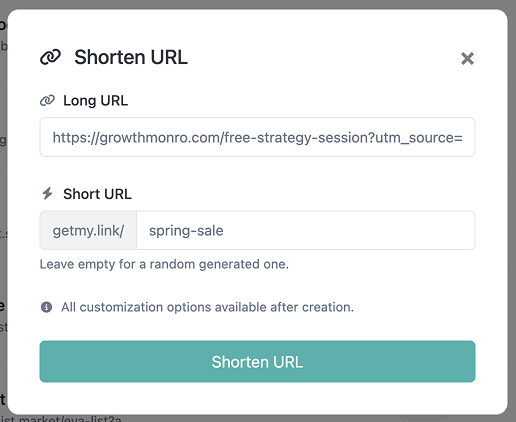
Traffic doesn’t come from one place, and users don’t behave the same way everywhere. Having the ability to adjust how your links and pages are presented makes the entire flow more effective.
Another important detail is how content is handled.
GetMy.Link is built with adult creators in mind, which means there are no built-in limitations on the type of content you can include. Creators can decide how their pages look, what they contain, and whether to include elements like content warnings – depending on their strategy.
This level of control allows for more precise positioning.
Links can match the tone of the platform they’re shared on, while still remaining consistent in structure and branding. The same system can support both safe and direct entry points without forcing everything into one format.
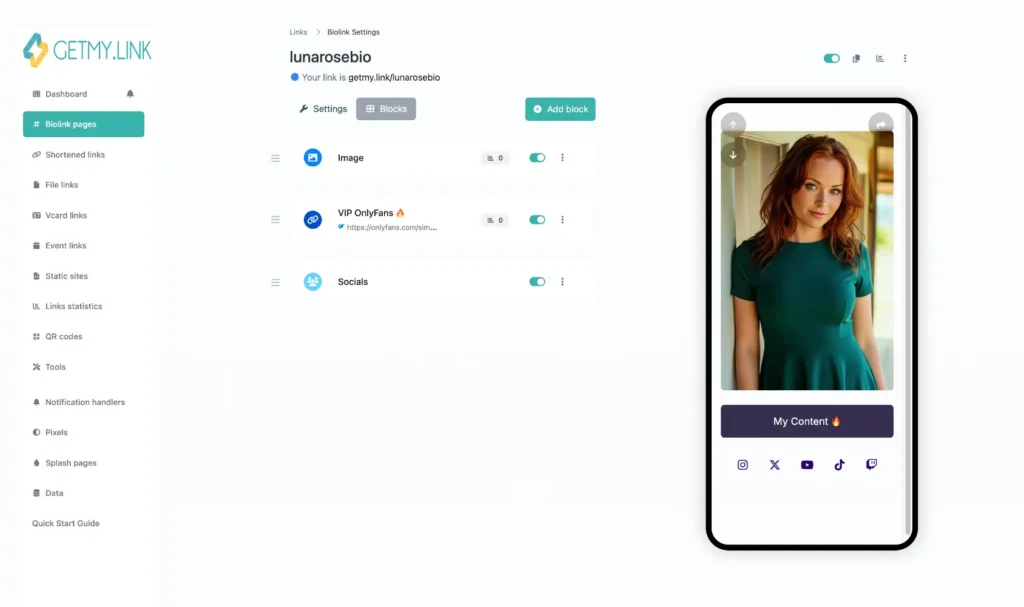
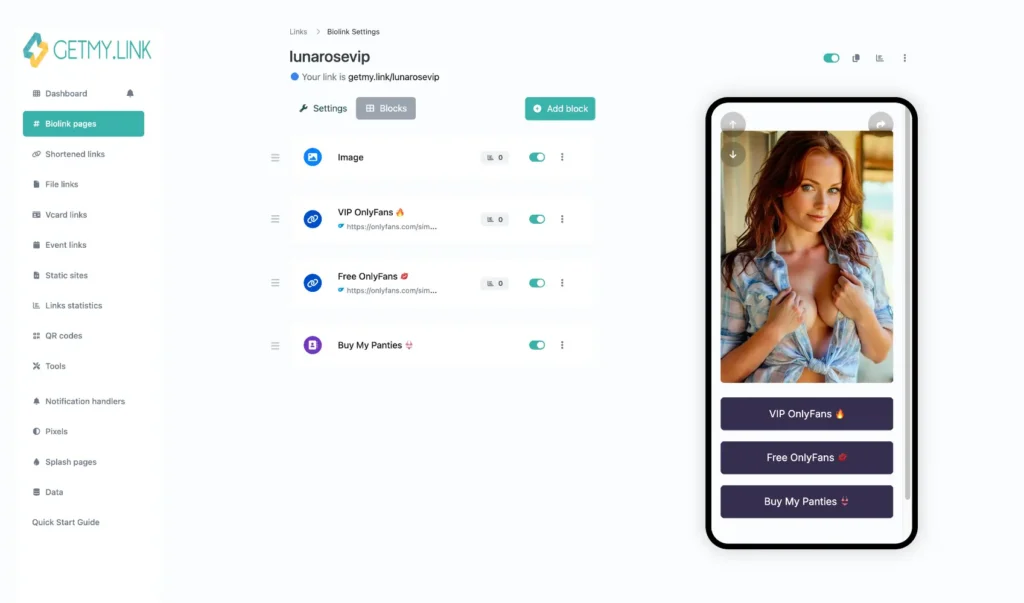
The platform is also free to use and offers generous limits.
Creators can build as many pages as they need, test different setups, and refine their structure over time without running into strict restrictions. And because there are no commissions, earnings stay entirely with the creator.
Taken together, this shifts how links function.They evolve beyond simple redirects.
They become part of a broader flow that connects traffic, content, and monetization in a way that feels cohesive and intentional.
Links as Part of a Larger System
A link does not exist on its own.
It sits between discovery and action.
Content draws attention. The link captures that interest. The page behind it shapes what happens next.
When these parts are disconnected, results become unpredictable. A post might perform well, but the link doesn’t convert. Traffic might arrive, but users don’t take action. The issue is not always the content – it’s how the flow is structured after the click.
This is where links become part of a larger system.
Instead of acting as a simple redirect, a link works as an entry point. It carries the user from one environment into another, and how that transition feels affects everything that follows.
A clear, recognizable link sets expectations before the page even loads.
A consistent structure across platforms makes the experience easier to follow.
A well-aligned destination makes the next step obvious.
Each part supports the next one.
When the link matches the content, and the page matches the link, the experience feels continuous. Users don’t need to second-guess what they’re seeing or where the link leads. They move forward naturally.
For OnlyFans creators, this continuity is critical.
Traffic often comes in short bursts and from different sources. There is little time to capture attention and guide it toward action. Any break in the flow – even a small one – can reduce the chances of conversion.
When links are treated as part of a system, that friction is reduced.
Creators move beyond isolated elements and shape a path where attention, context, and action stay aligned from start to finish.
Measuring Performance and Improving Over Time
Once your links are structured and aligned with your content, the next step becomes clear – understanding how they perform.
Traffic alone doesn’t tell the full story.
Clicks are only part of the picture.
What matters is what happens after the click.
Different platforms bring different types of users. Some arrive curious. Others already know what they want. Some move quickly. Others take time to explore. Without a way to observe these patterns, everything feels random.
This is where structured links start to show their full value.
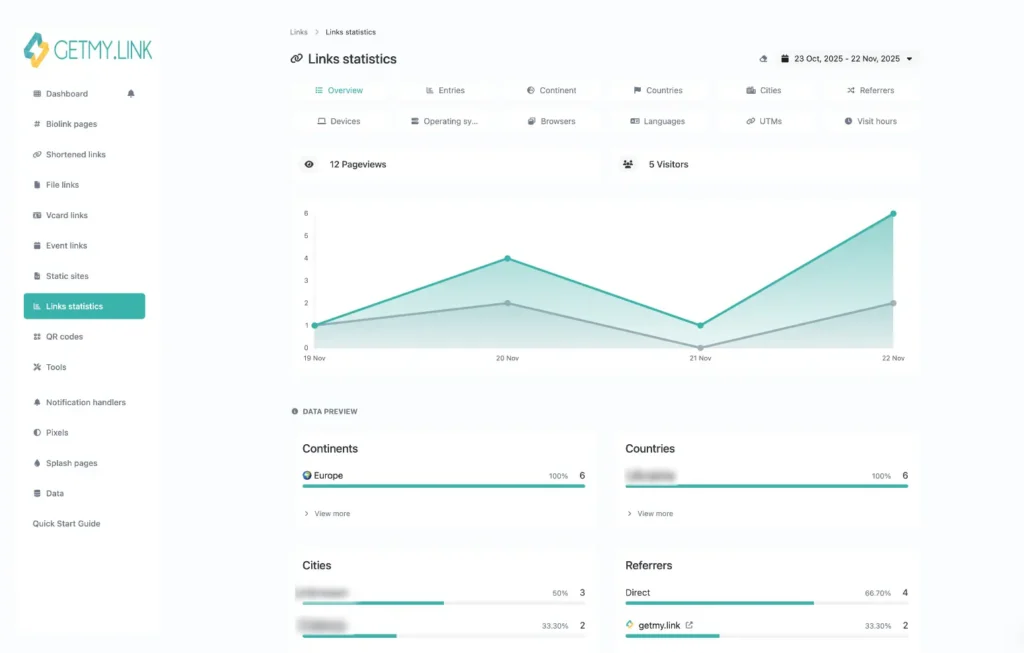
When each link is intentional and clearly placed, it becomes easier to see how users interact with it. You can track which links attract more attention, which ones lead to deeper engagement, and where users tend to drop off.
Even simple observations can change how you approach growth.
A link that performs well with TikTok traffic may not work the same way for Reddit. A direct link might convert better for one audience, while another responds more to a softer entry point. These differences are not obvious at first – they become visible only when links are treated as measurable elements, not just placeholders.
Over time, small adjustments begin to matter.
Changing a slug to make it clearer.
Adjusting the wording to match the tone of the platform.
Reordering links based on how users actually interact with them.
Each of these changes may seem minor on its own. Together, they create a noticeable difference in how effectively traffic turns into action.
For OnlyFans creators, this process is especially valuable.
Traffic can be unpredictable, and relying on spikes alone makes growth unstable. When links are used as a way to observe and refine behavior, the system becomes more consistent. Decisions are based on patterns rather than guesses.
This is another way link tools are evolving.
They are no longer just a technical step between platforms.
They are becoming a layer where performance is understood – and improved over time.
Conclusion
Short links used to be a small detail in a creator’s setup.
They were practical, but rarely strategic.
That’s no longer the case.
As content spreads across multiple platforms, and audiences behave differently depending on where they come from, every transition point starts to matter. A link is no longer just a transition point between platforms. It’s part of how your identity is perceived, how trust is built, and how decisions are made.
For OnlyFans creators, this shift is even more important.
You’re not working within a single platform. You’re navigating different rules, different audience expectations, and different levels of intent. Some users arrive curious. Others are ready to act. And the way your links are presented influences what happens next.
This is why branded short links are becoming a core element of a creator’s system.
They bring consistency across platforms.
They make navigation clearer.
They remove friction from the user journey.
And they give structure to how traffic flows.
Generic links are no longer enough – creators start shaping how each step looks and feels. A clean, recognizable URL builds familiarity. A clear slug sets expectations before the click. A consistent format makes the entire experience easier to follow.
Over time, this creates a stronger connection between your content and your identity.
Tools like GetMy.Link support this shift by giving creators more flexibility in how links are built and used. Custom slugs, structured pages, and the ability to adapt links for different platforms all contribute to a more cohesive system.
The goal isn’t to change how people find you.
It’s to improve what happens after they do.
Because growth is no longer just about getting attention.
It’s about guiding that attention – clearly, consistently, and with purpose.
And in that process, even something as simple as a short link becomes part of a much bigger strategy.